
The Real Math Behind Slot RTP (And Why It Matters)
Every slot player has heard the term "RTP" thrown around, usually right after a losing session. "This machine's payout is 96%, it has to pay eventually." That single sentence contains one of the most expensive misunderstandings in iGaming. RTP is real, it's regulated, and it's published — but it doesn't work the way most people think. Understanding what return-to-player actually measures, and what it doesn't, will change how you pick games, size your bets, and judge whether a session went badly or just normally.
What RTP Actually Measures
RTP, or return to player, is the theoretical percentage of all money wagered on a game that gets paid back to players over the long run. A 96% RTP slot keeps 4% as house edge on average. Simple enough. The catch is the phrase "over the long run." You can read more about it on สล็อตเว็บตรง.
That 96% is calculated across millions of spins — often tens of millions, sometimes billions in the case of popular titles under regulator review. The figure assumes random number generation running exactly as designed, and it emerges from the aggregate, not from any individual player's session. You can play a 96% slot for three hours and lose 60% of your bankroll. The math isn't broken. You simply weren't the long run.
Here's a concrete comparison to make it vivid. Two slots, both 96% RTP. Slot A pays mostly small, frequent wins with a max win of 500x. Slot B pays rarely, but hits can reach 50,000x. Same RTP, completely different experience. RTP alone tells you almost nothing about whether a game suits your bankroll or your patience.
Volatility Is the Number Players Actually Feel
Volatility, sometimes called variance, describes how the payouts are distributed. It matters more than RTP for most session outcomes.
- Low volatility: frequent small wins, slow bankroll drain, fewer huge hits. Typically 0.5x to 5x per win, with max wins around 100x to 500x.
- Medium volatility: a balance. Most modern mainstream slots sit here.
- High volatility: long dry spells, rare explosive wins. 2,000x to 100,000x max wins are common. Bankroll swings can be brutal.
A high-volatility slot with 96.5% RTP can burn through 300 spins without a meaningful return. A low-volatility game with 95% RTP might return something on nearly every tenth spin. If you have a 200-unit bankroll and want a two-hour session, the high-volatility game is the wrong pick regardless of its superior RTP.
A quick bankroll rule of thumb
- Estimate the number of spins you want to play (say 500).
- Multiply by your bet size (say 0.50). Total wager = 250.
- Assume you'll experience roughly 60-80% of expected RTP in a session. That's about 150-200 returned.
- For high-volatility games, add 50% more buffer to survive dry spells.
This isn't a prediction. It's a sanity check that stops you from betting 5 units per spin on a volatile slot with a 100-unit balance.
RTP in Poker and Sports Betting Looks Different
Poker isn't a fixed-RTP game in the slot sense, because you're playing against other people, not the house. The rake — typically 5% capped at a few dollars in cash games — is the house's cut. Your personal "RTP" depends entirely on your skill relative to the table. A strong player at a soft table might return 105%; a beginner at a tough one might return 85%. This is fundamentally different from slots, where no amount of skill changes the expected value.
Sports betting sits closer to slots in structure. Bookmaker margins (the vig) typically run 4-7% on standard two-way markets, meaning a fair 50/50 event is priced so that implied probabilities sum to about 105%. Sharp bettors who line-shop and exploit promotions can push their effective return above 100%. Casual bettors who parlay heavily and ignore closing lines often run well below 90%.
Where the edge actually lives
- Slots: no player edge possible. RTP is fixed. Optimize by choosing high-RTP titles (96%+) and managing bet size relative to variance.
- Blackjack: basic strategy reduces house edge to roughly 0.5%. Card counting can flip it positive, but most online games shuffle continuously.
- Video poker: certain variants (like 9/6 Jacks or Better) return 99.5%+ with perfect play. Deviating from optimal strategy cuts that dramatically.
- Poker: skill-driven. Your win rate is determined by opponents, not the platform (beyond rake).
Five Practical Tips That Actually Move the Needle
1. Check the RTP before you play. Most regulated operators publish game RTP in the info panel. Differences between providers is real — the same themed slot can ship at 94% in one market and 96.5% in another. If a game doesn't disclose RTP, that's a signal.
2. Match volatility to your bankroll, not your mood. Chasing a 20,000x jackpot on a 50-unit balance is a donation. Play high-variance games only with a buffer that lets you survive 500+ spins.
3. Don't chase the "due" hit. Slots have no memory. Ten dead spins don't make the eleventh more likely to pay. This is the single most common misconception and it drains more bankrolls than bad RTP ever will.
4. Use bonuses with realistic terms. A 100% match with a 40x wagering requirement on slots means you need to wager 40 times the bonus amount before withdrawing. Read the max bet clause — many bonuses void winnings if you bet over $5 per spin while clearing them.
5. Treat sessions as entertainment spend. The house edge guarantees you'll lose over time in any fixed-RTP game. The only rational framing is: this is what I'm paying for the experience, and here's my hard stop.
The Long Run Is Longer Than You Think
Here's a number that reframes everything. For a 96% RTP slot, a player running 100,000 spins at 1 unit per spin has an expected loss of 4,000 units, but the standard deviation is enormous — somewhere in the range of 20,000 units depending on the paytable. That means even after 100,000 spins, results vary wildly around the theoretical mean. Variance never fully disappears. It just gets smaller relative to the total wagered.
This is why "when does the machine pay?" is the wrong question. The right questions are: what's the RTP, what's the volatility, how big is my bankroll, and how long do I want to play? Get those four aligned and you've done everything in your control. Everything else — the timing of hits, the streaks, the near-misses — is noise generated by a random number generator doing exactly what it was built to do.
Players who internalize this stop feeling cheated by variance and start treating iGaming like what it is: a structured form of entertainment with a known cost. That shift doesn't make you luckier. It just makes you a lot harder to frustrate.

The House Always Wins? Why Smart Players Still Beat the Odds
Here's a number that should stop you cold: a 2023 study of online slot players found the average session...
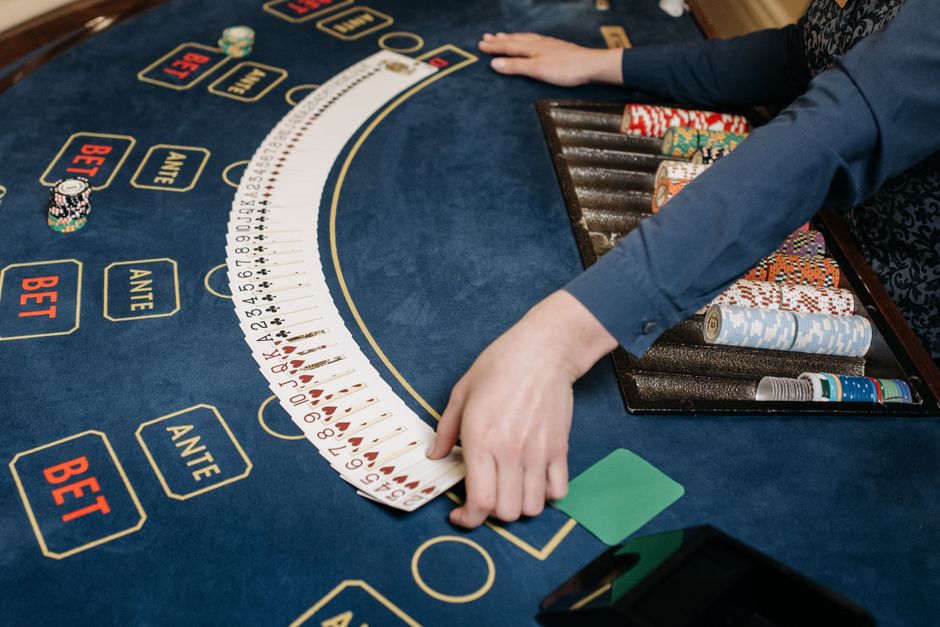
RNG vs. Live Dealers: Which Casino Game Suits You More?
Here is the oldest argument in gambling, and nobody has won it yet: do you trust a machine, or do you...
About Us