Are Aspen Trees Invasive in the UK? An Honest Explainer
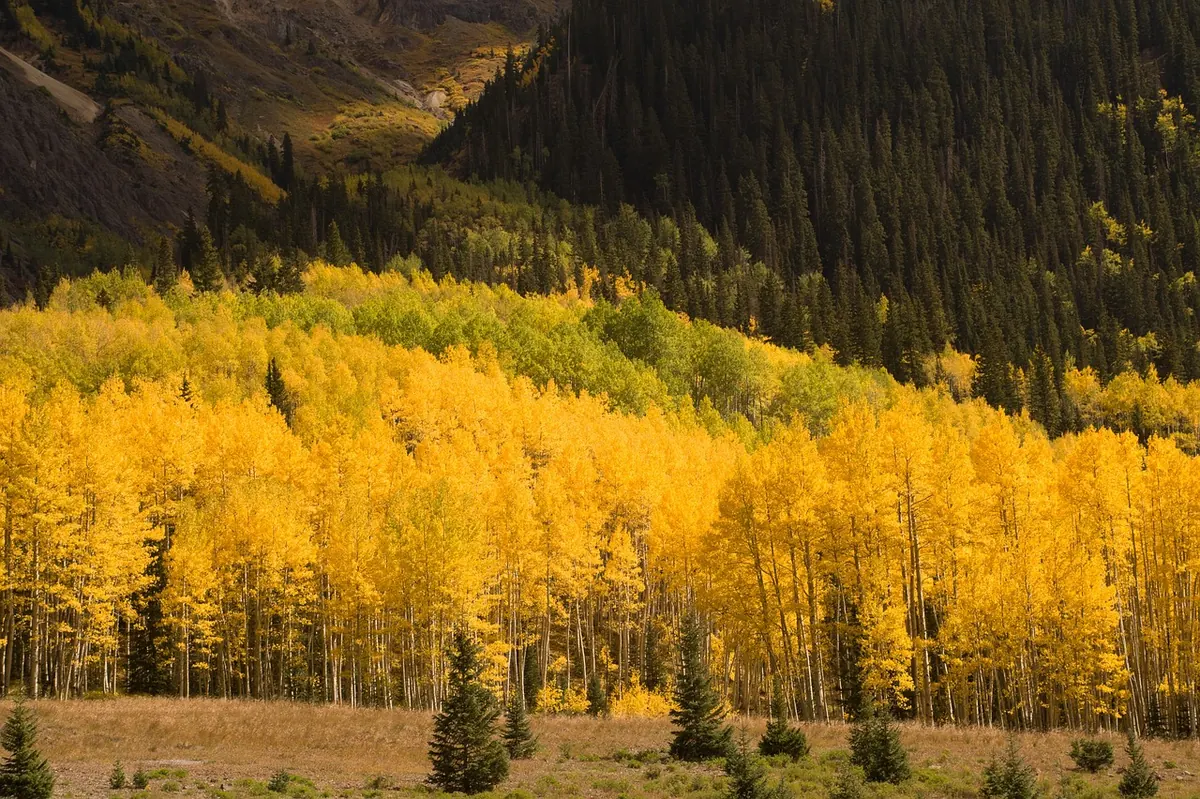
Ask two gardeners about aspen and you will get two different answers. One will describe leaves that shiver in the faintest breeze, a native tree that feeds rare insects and turns a hillside silver in autumn. The other will describe suckers pushing up through the lawn, the gravel path and next door's border, metres from where the tree went in.
Both are right. Aspen (Populus tremula) is a genuine British native, and native does not mean well-behaved. It is not invasive in the legal sense, and it is nowhere near as troublesome as Japanese knotweed, but it is a pioneer tree with a spreading root system, and in the wrong place that matters.
Aspen is native here — with one important quirk
Aspen is accepted as native to Britain and Ireland, and its range runs right across Europe and northern Asia, making it one of the most widely distributed trees in the world. In the UK it grows from the Weald to the Highlands, usually in small groups rather than large woods, often on moist, base-rich soils beside burns, flushes and woodland edges.
One quirk shapes everything else: aspen is dioecious, so male and female flowers sit on separate trees. Many British stands are single-sex clones, which means seed set is rare in places, and in parts of Scotland it barely happens at all. Where seed does set, it needs bare, damp, disturbed ground. So although aspen can spread by seed, in most UK situations the real engine of spread is underground.
How aspen spreads: suckers, not seedlings
Aspen's roots run shallow and wide, and they throw up new shoots — suckers — straight from the root system. A group of stems that looks like a handful of trees is often one organism, connected underground. It is the same trick behind the famous clonal aspen groves in North America, though our British colonies are far more modest.
Two things trigger a flush of suckers more than anything else: disturbance and light. Digging, mowing, ploughing and especially felling or hard pruning all provoke new growth. Take a chainsaw to a mature aspen and you will often make the problem worse before you make it better.
What that looks like over time
An established aspen creeps outward year by year. Suckers appear progressively further from the trunk, and each can become a new stem. The pace is slower than most people fear, but the direction of travel is clear and it rarely reverses on its own.
When aspen becomes a problem in a garden
In a large garden, a paddock or a wildlife area with room to spare, aspen is a fine tree. It supports a wide range of insects, carries early catkins and rustles like nothing else. Problems tend to arrive in specific situations rather than as a general rule.
- Small gardens. Below a few hundred square metres, the suckering radius of a mature tree reaches every corner, including the vegetable bed.
- Boundaries. Roots cross property lines, and a sucker in a neighbour's lawn is a reliable source of friction.
- Lawns and gravel. Mowing keeps suckers in check, but they return as pale, tufted shoots that look untidy.
- Paving and drains. Any poplar will exploit cracks and old, leaking drainage in search of water. Aspen is less notorious for this than hybrid poplars and willows, but the risk is real.
- Formal planting. If you want clean lines and a tidy border, aspen will fight you all the way.
If you already have one in a tight spot, the answer is usually management rather than removal, because removal is what triggers the sucker flush. Mow or cut suckers every few weeks through the growing season rather than once a year. In borders, pull them young while the soil is soft, taking the base of the shoot with them. A vertical root barrier set around a metre deep, installed before planting, will slow a young tree — though roots can eventually find a way under it.
If the tree is large, overhangs a boundary, or roots are suspected of affecting drains or structures, get a qualified arboriculturist to look before you cut. If there is a disagreement with a neighbour over roots or branches, take proper legal advice rather than acting on instinct; the rules on what you may cut, and from where, are more specific than most people assume.
Where aspen is unwelcome in the wider landscape
Away from gardens, aspen is rarely the villain. In the Scottish Highlands it is scarce enough to be a conservation priority, and native stands support specialist invertebrates, including rare hoverflies and beetles that depend on dead aspen wood and sap runs. Upland planting schemes actively encourage it.
The tension appears in sensitive open habitats: species-rich grassland, heathland, lowland fen and base-rich flushes. Aspen can colonise these when grazing or browsing stops, because livestock and deer are what normally keep young shoots in check. Remove the grazers and scattered aspens can thicken into scrub, shading out the plants the site was protected for.
Provenance matters too. Hybrid aspen and other poplar crosses, planted for biomass or quick cover, are not the same as native Populus tremula and can behave more vigorously, so ask where stock came from if you are planting near a site of conservation value.
Is aspen "invasive"? The word matters
In UK conservation, "invasive" usually means an introduced species that spreads into the wild and causes harm. The best-known examples — Japanese knotweed, Himalayan balsam, giant hogweed — are non-native and listed under Schedule 9 of the Wildlife and Countryside Act, which makes planting them in the wild an offence. Aspen is not on that list and is not covered by those rules.
Native plants can still spread aggressively, but that is usually a symptom rather than a cause: land that has lost its grazing, gained nutrients or been repeatedly disturbed.
Practical guide: should you plant one?
Aspen earns its place where there is space and a reason: wildlife value, wet ground, a native shelterbelt, an upland or woodland-edge scheme. Avoid it in courtyards, small plots and within a few metres of boundaries, paving or old drainage.
Before you buy or plant:
- Measure the space. Assume suckers will eventually appear several metres beyond the canopy, and decide whether that is acceptable.
- Choose native-origin stock for conservation planting, and ask about provenance when you order.
- Pick a spot where suckers can be mown, grazed or easily pulled, not a crowded border.
- Fit a root barrier at planting time if the tree will sit near a lawn, path or boundary. Retrofitting one later is much harder.
- Expect to manage it — a few cuts a season, or twenty minutes with a spade in spring.
- Check before you cut. Tree Preservation Orders, conservation areas and, for larger volumes of timber, felling licence rules may all apply. Your local authority tree officer can tell you what is relevant.
Done in the right place, aspen earns its keep. Planted in the wrong one, it becomes a chore. That is not invasiveness — it is a native tree behaving exactly as a native tree should, and deciding where it belongs is our job, not its own.
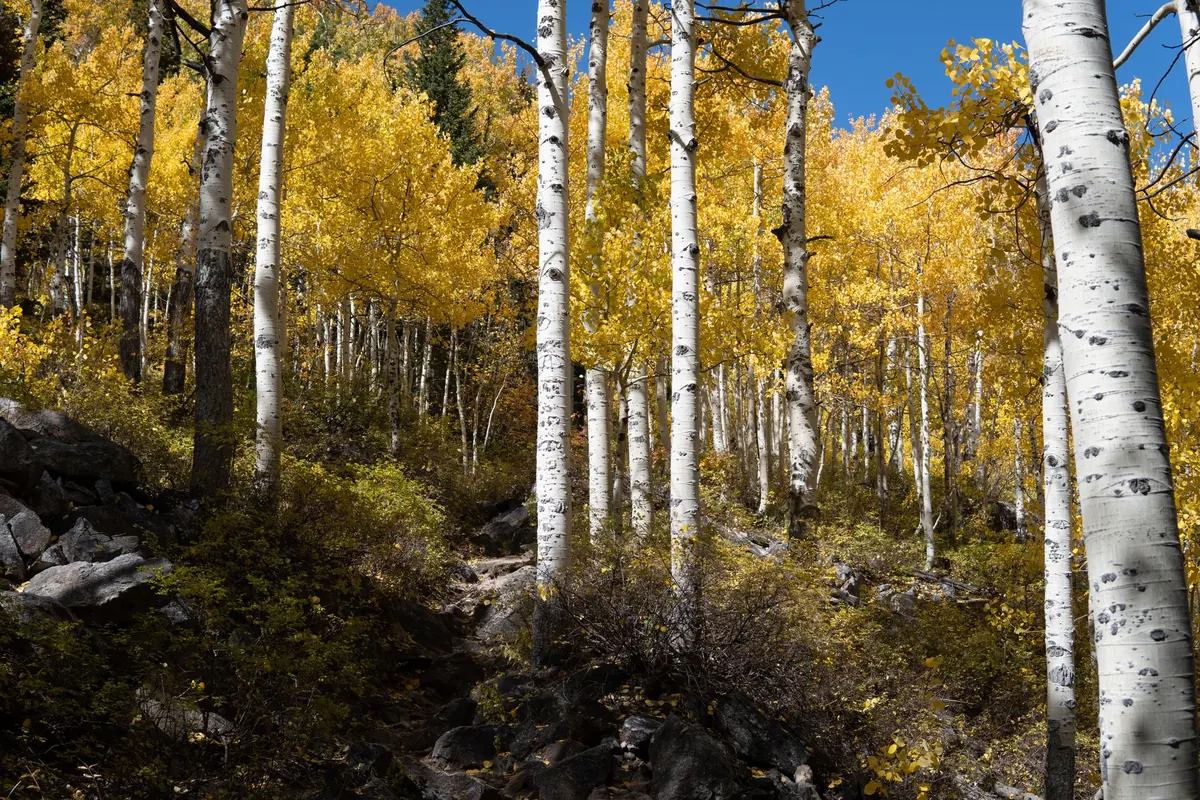
Photo: CorinnaSt / Pixabay
Aspen Leaf Miner and Other Common Pests: A UK Troubleshooting Guide
How to read the damage on aspen leaves and bark, from serpentine leaf-miner trails to gall mites and rust,...
Designing with Aspen: Landscaping Ideas for Small and Large UK Gardens
From flutter-leafed specimen trees to coppiced multi-stem features, here's how to use native aspen in UK...
About Us