Common Mistakes When Growing Aspen Trees (and How to Avoid Them)
Aspen earns its place in a garden the moment the first breeze sets those leaves quivering. It also asks for a few conditions that many planting schemes quietly refuse to give it: cool roots, steady moisture, room to spread, and a tolerance for a little untidiness. Most aspen problems trace back to a handful of decisions made in the first season and then repeated every year afterwards. None are difficult to fix, but all are far easier to prevent than to undo.
Planting Too Deep in Soil That Holds Water
The usual assumption is that aspen will grow anywhere damp. It copes with wet ground better than most trees, but it does not enjoy airless, waterlogged soil around its roots, particularly from November to March. Heavy clay that sits wet all winter is where young aspens sulk, canker and die back from the top down.
The second half of the problem is planting depth. Bare-root and potted aspens both have a root flare — the point where the trunk widens into the roots — and that flare needs to sit at or just above soil level. Burying it five or ten centimetres too deep is enough to slow a tree for years and to encourage rot at the base. Nursery soil lines are easy to misread, so scrape the surface gently with a finger and plant to what you find, not to what you hope.
On damp ground, plant on a low mound. Fork grit and well-rotted organic matter into a metre-wide area, set the tree on top, and let the roots run down the slope rather than sit in a sump. On free-draining soil, a normal planting hole is fine. Firm gently, water thoroughly, and stake only on a genuinely windy site.
Watering Well for Two Years, Then Forgetting
Establishment is where drought stress does its damage. For the first two or three growing seasons, a deep soak every seven to ten days in dry weather is worth far more than a daily sprinkle. Soak the whole root zone out to the spread of the branches, then let the top few centimetres dry before watering again. On sandy soil, shorten the interval.
Mulch helps enormously. A layer of bark, leafmould or compost 8–10 cm deep over a metre-wide ring slows evaporation and keeps the roots cool. Keep it clear of the trunk, because a mulch collar pressed against the bark invites rot.
Mature aspens are tougher than their thin bark suggests, but a long dry spell still shows: leaves yellow and drop early, shoot tips die back, and the tree responds the following spring with a flush of suckers. That last point matters. Drought is one of the main triggers for sucker growth, so watering through a dry summer is also a form of sucker control.
Mower Blades and Strimmer Line
Aspen roots are shallow and wide, often running through the top 30 cm of soil and well beyond the canopy. In a lawn, that puts them exactly where the mower goes.
A low blade slices through them, and a strimmer line takes bark off the trunk in a neat ring. Aspen bark is thin, and it does not seal off decay well, so a small wound can become a permanent weak spot and an entry point for canker.
- Leave a mulch ring or a circle of longer grass at least 60–90 cm around the trunk, and hand-weed it.
- If you must mow close, raise the blade across the whole root zone rather than just around the stem.
- Fit a tree guard or spiral wrap on young trees where a strimmer is used nearby.
- Remove stakes and ties after one or two seasons. A tree left tied for years develops a weak trunk and rubs its own bark.
Pretending Root Suckers Won't Happen
European aspen (Populus tremula) is a clonal tree. It spreads by sending up suckers from its roots, and a single tree in open ground will eventually become a thicket. That is not a fault in the tree; it is how aspen colonises ground after fire, felling or grazing.
Suckering gets worse after stress: root damage, compaction, drought or a hard cut. Digging a trench through the root zone or rotavating nearby often triggers a burst of new shoots, which then get cut back, which triggers more. The real mistake is ignoring the first few suckers until they are a thicket, then attacking them all in one afternoon.
- Decide early where the colony may go — a boundary thicket, a wild corner, a bank — and where it may not.
- In lawn, mow suckers every two or three weeks through summer. Repeated cutting exhausts them better than one deep dig.
- Pull very young shoots by hand while they are still soft. Cut stubs simply regrow.
- Root barriers can help, but aspen will sometimes travel under or around them. Install one before planting, never as an afterthought.
Expecting a Tidy, Long-Lived Specimen
Aspen is fast, upright and relatively short-lived: decades rather than centuries. It also sheds, drips and leans. A large mature tree in an exposed spot can drop limbs in a gale, and its roots will travel under paths and patios.
Pruning should be minimal — dead, crossing or damaged wood only, taken out in late summer or early autumn rather than midwinter. Heavy pruning tends to produce watersprouts and more suckers, which is rarely the result you want. Keep aspens well clear of foundations, drains and paving, and if you are planting anywhere near a building, take advice from a qualified arboriculturist before you dig.
A Routine That Prevents Most Problems
None of this is elaborate. A short checklist, worked through once or twice a year, keeps aspen in the vigorous state where it looks after itself.
- At planting: check the
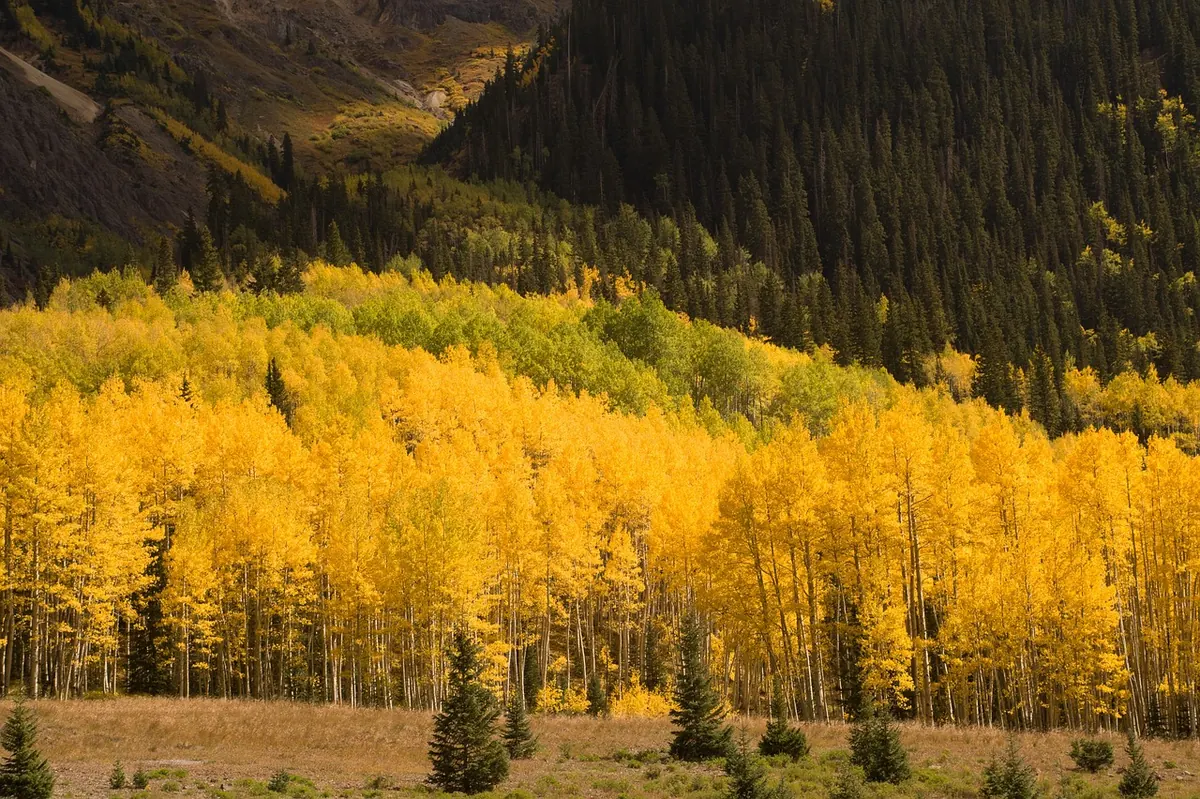
Photo: snibl111 / Pixabay
Aspen Leaf Miner and Other Common Pests: A UK Troubleshooting Guide
How to read the damage on aspen leaves and bark, from serpentine leaf-miner trails to gall mites and rust,...
Designing with Aspen: Landscaping Ideas for Small and Large UK Gardens
From flutter-leafed specimen trees to coppiced multi-stem features, here's how to use native aspen in UK...
About Us