Planting Aspen Trees: A Step-by-Step Guide for UK Gardens
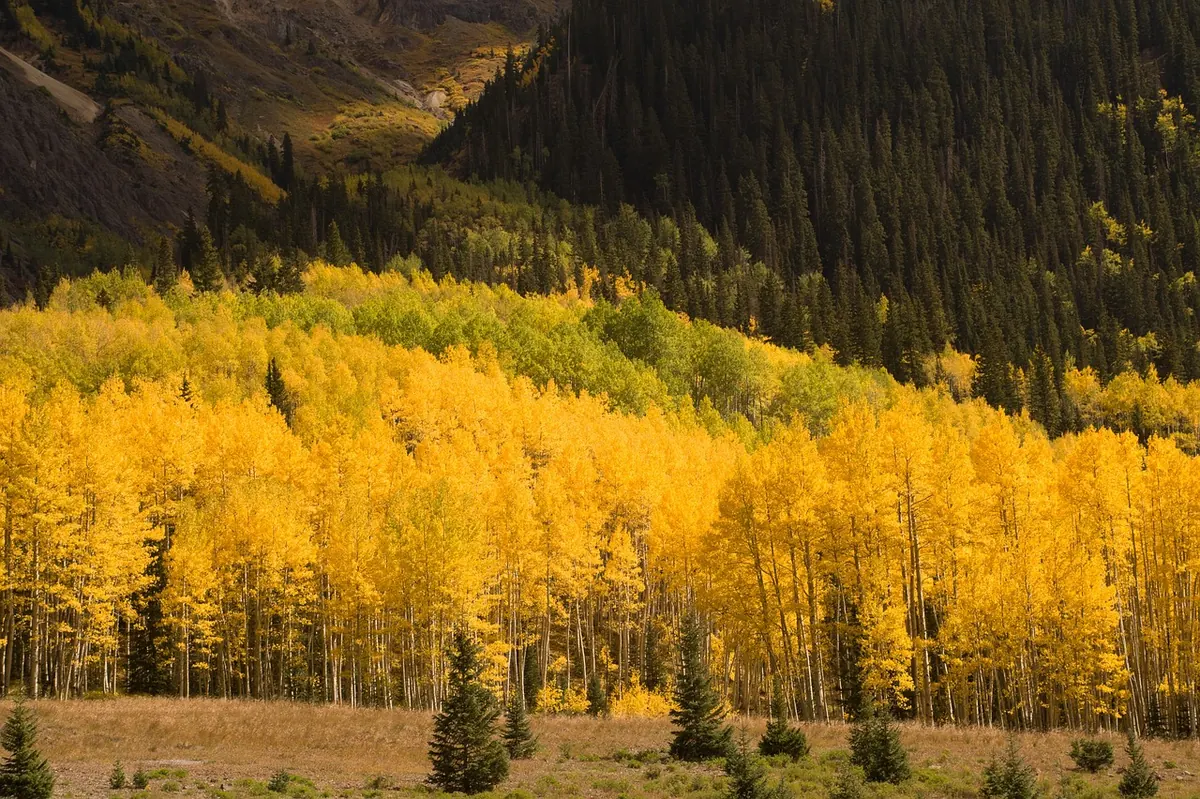
Few trees earn their place in a garden as quickly as aspen. The leaves are moving in the faintest breeze — a soft rustle that sounds like running water when a gust passes through — and the pale bark and butter-yellow autumn colour do the rest. Populus tremula, our native aspen, is also one of the toughest broadleaves you can plant in Britain: wind, frost, thin soil and cold all suit it.
There is one thing to settle before you reach for a spade. Aspen spreads. It throws up suckers from its roots and, left to itself, will gradually turn a single tree into a small grove. That is not a fault to be corrected; it is how the tree works, and it shapes every decision that follows — where you plant it, how much room you give it, and how you live with it afterwards.
Get those decisions right and an aspen will put on a metre or more of growth a year through its first decade, filling a corner of the garden with movement and sound long before slower trees have settled in. Get them wrong — planted tight against a patio, in a wet hollow, in the middle of a cherished border — and you will spend the next twenty years fighting it. This guide takes you from choosing a tree to living with the grove it will want to become.
Choosing the Right Aspen for Your Garden
For most UK plots the tree to buy is the native Populus tremula: fast-growing, extremely hardy, and generous to wildlife. Moth caterpillars feed on the foliage, the catkins are an early source of pollen, and the leaves flicker in a way no other British tree quite matches.
The North American quaking aspen, Populus tremuloides, is very similar in look and habit. Its leaves are a shade broader and it is marginally less tolerant of waterlogged ground, but in a British garden the two behave almost identically.
Which Form Should You Buy?
- Populus tremula (native aspen) — the default choice. Hardy, wildlife-friendly, broadly conical, eventually 15–20 metres in good conditions. Best where you have space to let it spread.
- Populus tremuloides (quaking aspen) — near-identical in effect, slightly smaller in most UK gardens, and often sold as a clonal selection with particularly good autumn colour.
- Populus tremula 'Erecta' — a narrow, upright selection that fits a small garden far more comfortably than the species, reaching perhaps 8–10 metres with a spread of only two or three. It can still send up the occasional sucker.
Buy bare-root whips from a UK nursery between November and March for the best value and the quickest establishment. Expect whips of 60–120cm; they are cheap enough that you can afford to plant two or three and thin them later. Container-grown trees cost more but can be planted at almost any time the soil is workable, which is handy if you have missed the bare-root window. If the fluffy seed that female trees release in early summer would bother you, ask the nursery for a male clone.
Finding the Right Site
Aspen is a pioneer species: it colonises open, disturbed ground, so it wants light and it does not want competition. Full sun gives you the best leaf movement and autumn colour, though light shade is tolerated. Any reasonable soil will do, provided it stays moist but drains. Deep, free-draining loam is ideal; shallow chalk over rock and ground that sits wet all winter are the two situations to avoid, and if drainage is poor, plant on a slight mound rather than in a hollow.
Aspen is a tree of the woodland edge, the railway embankment and the windswept hillside — places where nothing else has got there first. That tells you what it wants: an exposed, open, slightly rough corner of the garden rather than a sheltered, manicured one. It also tells you something about the company it keeps. Plant it where it can stand alone or with other tough natives — birch, rowan, hawthorn, willow — rather than in the middle of a collection of delicate herbaceous plants.
The real decision is distance. Suckers appear from shallow roots, usually within roughly the spread of the canopy and sometimes beyond. So:
- Keep it away from a small lawn you want to keep immaculate, a border of choice perennials, a patio, a driveway or a gravel path.
- Leave generous room from foundations, drains, soakaways and boundaries. A mature aspen can reach 8–12 metres tall and several metres wide, so give it at least that much clearance from anything you would rather not disturb. If you are unsure whether a spot is too close to a building or a drain, ask a qualified arboriculturist before you plant.
- Do not worry about heavy clay, exposed sites or poor, stony ground — aspen copes with all of them, and often looks better for a bit of wind and weather. On heavy clay, improve the planting hole with a little compost and plant slightly proud of the surrounding soil.
- Do think about mowing before you think about planting. Grass you cut regularly is the single most effective sucker control you will ever have, so a tree at the far end of a mown lawn is far easier to live with than one in the middle of a wildflower meadow.
How to Plant an Aspen: Step by Step
- Prepare the site in advance. Clear a circle at least a metre across of grass and weeds, ideally the autumn before planting. Competition in the first two years is the main reason young aspens stall.
- Soak the roots. Stand a bare-root tree in a bucket of water for an hour before planting. Water a container-grown tree thoroughly the day before and again just before you take it out of the pot.
- Dig the hole. Make it as deep as the root system and roughly twice as wide. Do not dig deeper than the tree was previously planted — the root flare, where the trunk widens into the roots, must sit at or just above soil level.
- Improve the soil modestly. Mix the excavated soil with a little garden compost or well-rotted manure and, if you like, a handful of mycorrhizal fungi. Aspen is not greedy; over-enriching the hole encourages soft, sappy growth that the wind will spoil.
- Position the tree. Spread the roots out naturally, checking there are no circling or kinked ones. For container-grown trees, tease the outer roots loose with your fingers.
- Backfill in stages. Return the soil a spadeful at a time, firming gently with your heel between layers so there are no air pockets. The tree should feel solid, not rammed.
- Water and mulch. Give it ten to fifteen litres slowly, then spread a 5–8cm ring of bark mulch or well-rotted compost over the root area. Keep the mulch clear of the trunk by a hand's width.
- Protect it. Fit a spiral guard against rabbits and voles, and a stake or tree tie only on genuinely exposed sites — aspens develop a stronger trunk if they are allowed to flex. Remove any stake after two growing seasons.
Caring for a Young Aspen
For the first two summers, water deeply once a week in dry spells — a slow soak is worth far more than a daily sprinkle. Keep the planting circle free of grass and weeds, which compete for the same shallow moisture. There is no need to feed; a mulch is enough.
Pruning in the early years should be limited to removing dead, damaged or crossing branches, and any work is best done in late summer. Aspen bleeds heavily from cuts made in late winter and early spring, and summer pruning reduces the risk of silver leaf infection getting into the wounds.
Living With Suckers
This is the part of aspen growing that decides whether you will love the tree or resent it. Suckers are not a sign of trouble; they are the tree expanding. What matters is where they arrive.
If the tree stands in mown grass, the answer is simple: run the mower over the shoots every few weeks through the growing season. Repeated cutting exhausts each sucker without harming the parent, and the mowing strip becomes a natural boundary that keeps the grove roughly where you want it. Never dig suckers out — cutting a root simply prompts more shoots from either side of the cut.
Where mowing is not possible, you have three choices: leave them and enjoy the thicket, mow or strim a defined buffer zone, or install a root barrier when you plant. A heavy-duty barrier of at least 60cm depth, installed vertically around the planting area, will slow the spread but not stop it forever — aspen roots will eventually find a way over or under a poorly fitted edge.
If your tree was planted as a single specimen and you want a single trunk, the practical answer is to plant it in the middle of a lawn, cut the suckers, and accept that the mower is part of the maintenance routine. Better still, decide now that a grove is what you want, and thin the shoots to three or four of the strongest stems. A small stand of aspen, rustling together in the wind, is a far better garden feature than a lone tree that keeps trying to become one.
Aspen Through the Seasons
- Spring — grey-green catkins open before the leaves and are one of the earliest pollen sources for bees emerging from hibernation.
- Summer — the flattened leaf stalks, which is what makes the leaves tremble, are at their best in a light breeze. The foliage feeds a long list of moth caterpillars, including the poplar hawk-moth.
- Autumn — the whole crown turns clear yellow, often holding colour well into November. Fallen leaves break down quickly into a fine leaf mould.
- Winter — young stems are pale grey-green and almost luminous in low sun, and the bare crown shows the tree's fine, upright branch structure clearly.
Plant an aspen where its spreading habit can be an asset — the far corner of a lawn, the edge of a boundary, a rough patch at the end of the garden — and it will give you more sound, colour and wildlife in ten years than most ornamentals manage in thirty.
Common Questions
How close can I plant to a house?
Further than you think. Suckers travel, and aspen is fast-growing, so a minimum of ten metres from a building is a sensible rule of thumb. Closer than that, and you should be thinking about a smaller form or a different tree altogether.
Will it damage drains?
Aspen roots are shallow and fibrous rather than thick and invasive, but they will follow moisture. Keep it well clear of old clay drains and soakaways, and take professional advice if you are planting anywhere near a boundary or a service run.
Why is my aspen not growing?
Nine times out of ten it is competition or drought in the first two seasons, or planting too deep. Check the root flare is still visible at soil level and keep the ground around it clear and watered.
Do those things, and the aspen will do the rest: settling in quietly, adding a metre a year, and filling your garden with that unmistakable dry rustle that sounds, on a windy afternoon, exactly like running water.
Photo: VanVangelis / Pixabay
Aspen Leaf Miner and Other Common Pests: A UK Troubleshooting Guide
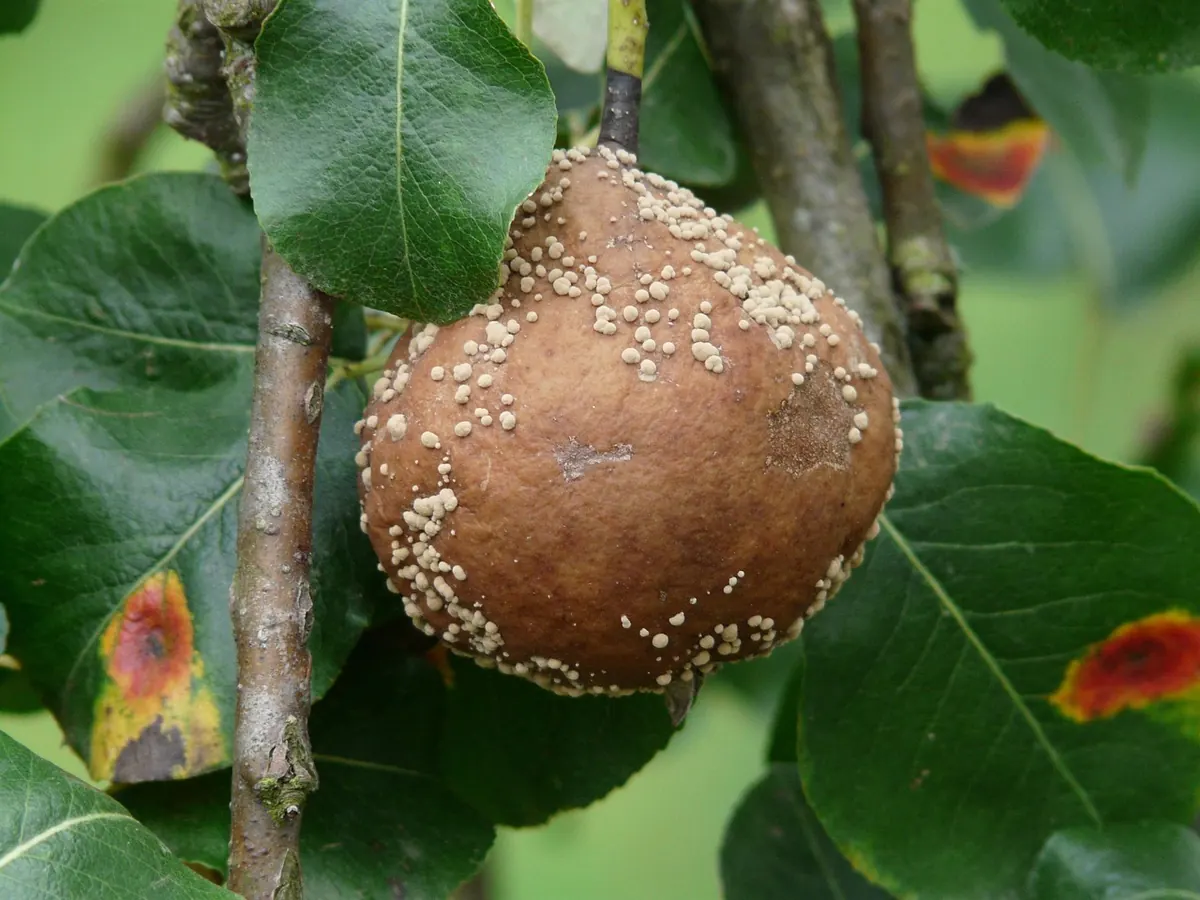
How to read the damage on aspen leaves and bark, from serpentine leaf-miner trails to gall mites and rust,...
Designing with Aspen: Landscaping Ideas for Small and Large UK Gardens
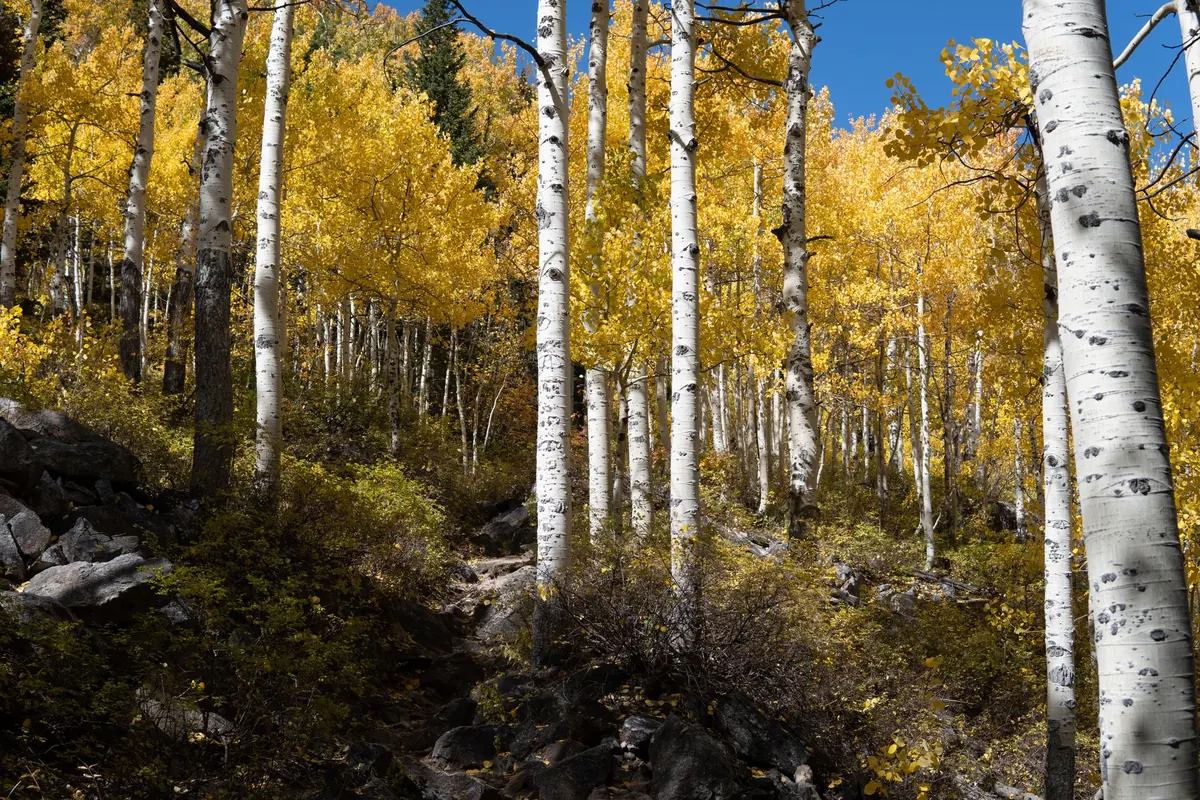
From flutter-leafed specimen trees to coppiced multi-stem features, here's how to use native aspen in UK...
About Us